
"trial planting"
700 article(s) found

Taiwan coffee flavor Taiwan grows its own coffee
In the 18th century, in 1884 (Guang Xu's 10th year), the British introduced coffee for trial planting in the three Gorges of Taipei. during the Japanese occupation era, the Japanese saw that Taiwan's climate and soil were suitable for coffee, so they introduced "Arabica" from abroad and successfully planted it in the north. Mizuho invested a lot in planting and had a good yield. In the 19th century, in 1941, the output was rich, the quality and flavor was good, which made coffee in Taiwan's complete victory period. No.
Taiwan Coffee Flavor Coffee Taiwan Coffee Culture
In the 18th century, in 1884 (Guang Xu's 10th year), the British introduced coffee for trial planting in the three Gorges of Taipei. during the Japanese occupation era, the Japanese saw that Taiwan's climate and soil were suitable for coffee, so they introduced "Arabica" from abroad and successfully planted it in the north. Mizuho invested a lot in planting and had a good yield. In the 19th century, in 1941, the output was rich, the quality and flavor was good, which made coffee in Taiwan's complete victory period. No.
Global climate change is serious, will Australia become a suitable new coffee growing area?
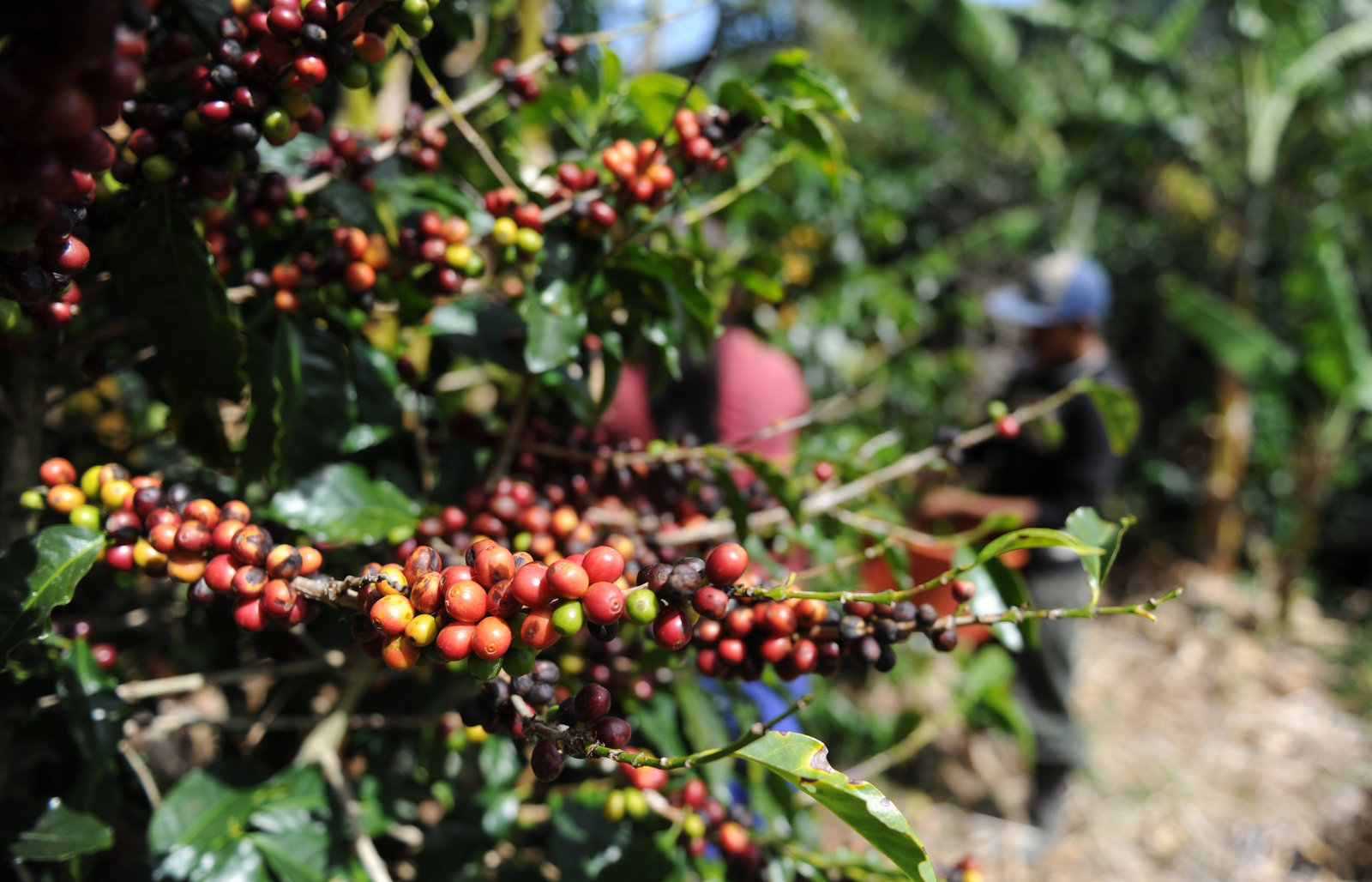
Professional coffee knowledge exchange More coffee bean information Please pay attention to coffee workshop (Weixin Official Accounts cafe_style) As early as a few years ago, the coffee industry has sounded the alarm that climate change threatens the supply of coffee beans. But the situation remains grim today. Greg Meenahan, partner director of World Coffee Research, a nonprofit research institute, describes it as expected by 2050

Galapagos Islands Coffee Manor Variety introduction Fine Coffee beans
In 1869, Mr. Manuel Coppos, the first owner of the Galapagos Islands, hoped to find a crop suitable for growing on his farm. He invited a team of French agronomists to visit the area, and finally they planted Arabica coffee trees on the Galapagos Islands for the first time. However, after several trials and tribulations, coffee in the Galapagos Islands was planted in 1915

The spreading history of coffee
1. Coffee was introduced into Europe in the 16th century, and coffee attracted the attention of European countries in the name of Arabic wine. In the middle of the 17th century, coffee became popular in Europe. 2. When coffee was introduced into Asia in 1600, Baba Budan, a Muslim, successfully smuggled seven seeds on his belly and planted them for trial in the mountains of Mysore in southern India without large-scale cultivation. sixteen

DIY Coffee Mat | Metro Railway
The designer tried to dye it with leather, but the result was always a mess, always too dark. Until we find a new way of dyeing, that is to use spray bottles. Small bottles of dye are a little expensive, miniature spray bottles are about $2, and a discarded natural leather is quite cheap. Material plant leather processing leather, 8-10 oz weight acrylic leather dye tool knife or

DIY Coffee Mat | Metro Railway
The designer tried to dye it with leather, but the result was always a mess, always too dark. Until we find a new way of dyeing, that is to use spray bottles. Small bottles of dye are a little expensive, miniature spray bottles are about $2, and a discarded natural leather is quite cheap. Material plant leather processing leather, 8-10 oz weight acrylic leather dye tool knife or
Coffee beans are fragrant and pesticide-free in Chaoyang Community, Taiwan.
The SuAo Town Chaoyang Community in Yilan County is located in the Greater South Australia area. It used to be rich in cantaloupe, but people in the community thought that the cost of cantaloupe pesticides was high. In 1992, it changed to grow coffee, and accidentally found that the coffee beans planted in the shade of the original mixed forest had a better flavor. Now more than 1300 coffee trees have been planted in the community, and coffee drinks have become a local feature. The coffee tree planted in Chaoyang Community is a unique Arabica variety.

Introduction to the quality of Flower Butterfly is Rosa coffee good?
Professional barista communication please pay attention to the coffee workshop (Wechat official account cafe_style) Flower Butterfly: the Flower Butterfly has 40% Rose Summer quality pedigree, which is composed of Rosa geisha, Kaddura Caturra and Kaduai Catuai. It is planted in the Baru volcano region of Pokuit and grows in the volcanic area at an altitude of 1600 meters. The treatment plant uses fine washing.

Introduction of Katim Coffee beans
The characteristic editing was 3846 seeds per kilogram when exposed to cool sun for 2 months. There were about 5000 seeds in cool sun for 5 months, the germination rate was more than 95% in two months after seed production, 85% in three months, became weak after three months, and most seeds lost their germination rate after six months. The resistance to leaf rust is sub-immune type or extremely high resistance type, and its plant type is compact and mostly exposed in the branches.

Introduction to the Variety Manor of Yunnan Kadim Coffee Flavor description, Grinding scale treatment
Yunnan Katim Coffee Flavor description Grinding Calibration method Variety Manor introduction Typica and Bourbon, two classic high-quality coffee varieties, are the main varieties of coffee in Yunnan. In 1991, Katim Catimor series varieties were introduced from Kenya (stronger anti-virus ability, higher yield). A variety of Arabian species (also known as small seed species). Due to
Introduction to the origin of coffee knowledge coffee
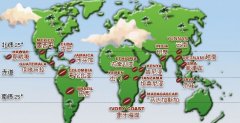
Coffee belt (coffee belt) coffee is mainly grown in tropical and subtropical regions, and coffee is mainly produced in more than 70 countries in the world. Most of them are distributed between 25 degrees of the Tropic of Cancer. According to the statistics of the Food and Agriculture Organization of the United Nations in 1976, coffee is grown in 76 countries and regions in the world, with an area of 118.845 million mu, of which Latin America is 64.86 million mu, accounting for the world's acreage.

History of the spread of Coffee Coffee was introduced into China
1. Coffee was introduced into Europe in the 16th century, and coffee attracted the attention of European countries in the name of Arabic wine. In the middle of the 17th century, coffee became popular in Europe. 2. When coffee was introduced into Asia in 1600, Baba Budan, a Muslim, successfully smuggled seven seeds on his belly and planted them for trial in the mountains of Mysore in southern India without large-scale cultivation. sixteen
The villagers grow Arabica coffee beans and smell coffee in Datong.
Liu Yixin, a native of Datong, has successfully planted an "Arabica" coffee tree, which is named "Qilan Dayang Coffee" according to the homonym of the Atayal people and the geographical location of the park. It is said that the coffee beans grown in the mountains are rich in acid, and other villagers have tried to plant them one after another. To make Datong villagers float more coffee flavor. Liu Yixin and Huang Xiulan used to grow cold vegetables for a living. When they visited the south six years ago, they found Ali.

Extract herb essence herb coffee is favored
Coffee has the effects of refreshing and anti-fatigue. At present, a new type of coffee herbal coffee appears in the market, which contains a variety of ingredients beneficial to human health, and has won the favor of consumers with its unique charm. It is understood that the herbal coffee was introduced from Malaysia by Guangxi Guijitang Biotechnology Co., Ltd., using freeze extraction technology to extract coffee beans, Maka and Dongge Ali.

Flavor description of Brazilian Yellow bourbon Coffee beans varieties produced by grinding scale
The flavor description of Brazilian yellow bourbon coffee beans, grinding scale, taste production area, product name: Brazil yellow bourbon Brazil Chacal Estate Yellow Bourbon regulation: 227g raw bean producing country: Brazil: Minas Minas Llicinea manor: waterfall manor species: yellow bourbon grade: 2 d/300gr, 17-18 mesh height: 1200m ~ 1380m

Introduction of planting techniques of Columbia Spring Manor, COE Champion Manor
Introduction to the planting techniques of COE Champion Manor Columbia Spring Manor the province of Cauca Valley goes south to Cauca, and then southeast to Vera, the second largest coffee producing region in Colombia, which is also the largest boutique bean producing area. Further south is the boutique producing area Nalinglong province, both of which have volcanic and fertile volcanic ash soil, because volcanic ash is rich in minerals, nourishing coffee fields and helping coffee fields.
Coffee planting History of Coffee introduction and expansion in China in the early stage (3)
1. Investigation on the year of coffee introduction in Hainan Island in 1898 1.1 the age of the early introduction of coffee in Hainan Island is indisputably expressed as 1908 in many local chronicles, agricultural history, agricultural history and various books and periodicals in China. However, the remains of the century-old coffee trees in Hainan Island are still there, and the descendants of the ancient trees are still there. Therefore, the century-old coffee trees that actually exist in Hainan have unequivocally rewritten Hainan.

France encounters bottleneck in developing coffee industry
French King Louis XIV (1638-1715) once tried coffee. Although he was insensitive to the bitter taste, he did not ignore the huge potential business opportunities of coffee. After all, the court alone spent 110000 yuan a year to buy coffee to solve the princess's coffee addiction. Coffee was the most valuable agricultural product at that time, so Louis XIV was eager to share in the global coffee industry. Seventeen ⊙ eight years, France imitates the Netherlands

Coffee culture Coffee spread track in the world
Coffee was introduced into Europe Islam prohibited drinking alcohol, but also from the side to promote people to drink a lot of coffee, in the 16th century, coffee in the name of Arabic wine attracted the attention of European countries. However, Arab countries are very strict with the export of coffee, and even require raw beans to be boiled before they can be exported. However, with the continuous development and frequency of trade, coffee in Europe in the mid-17th century.